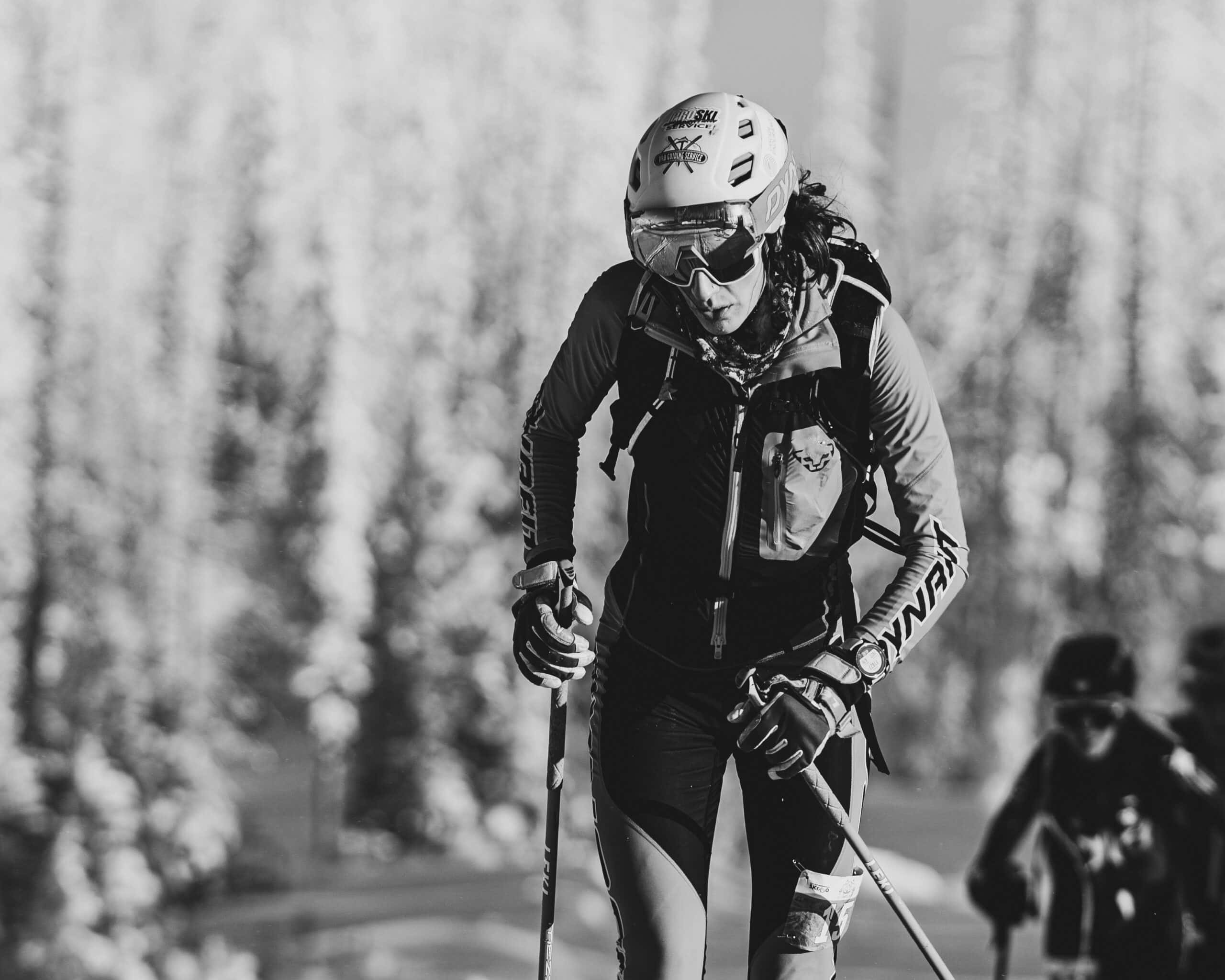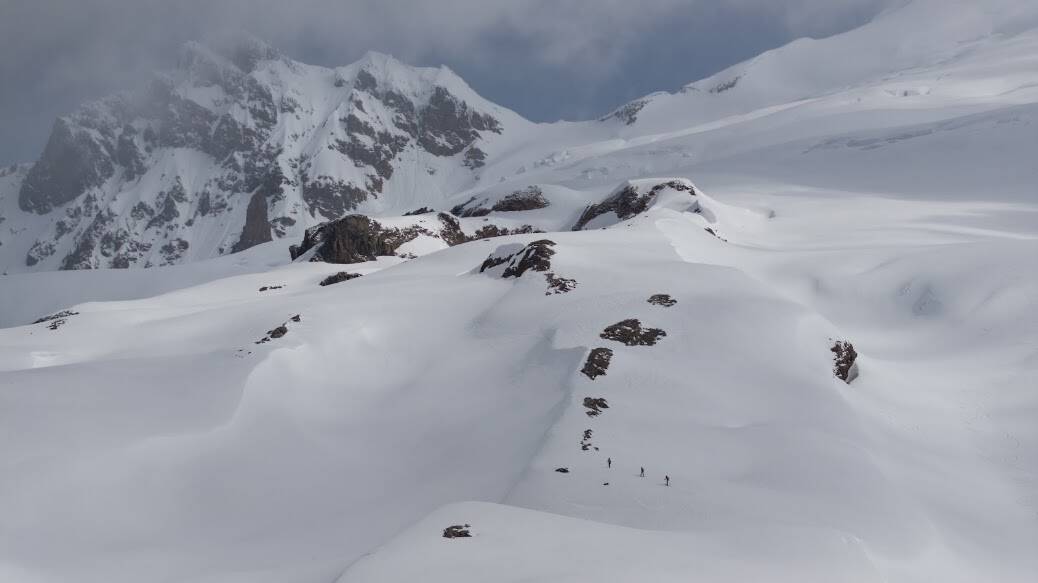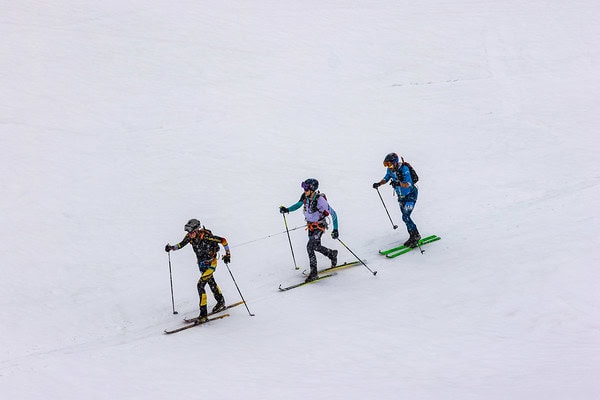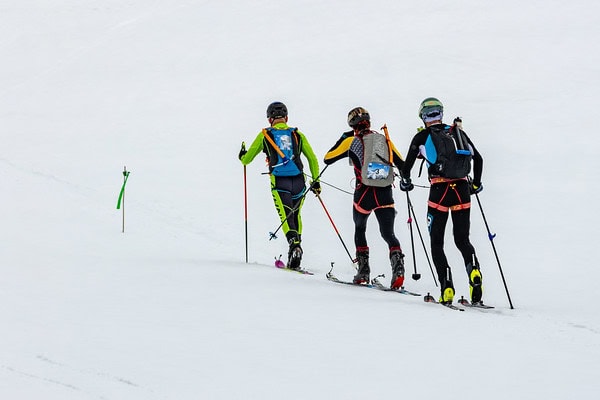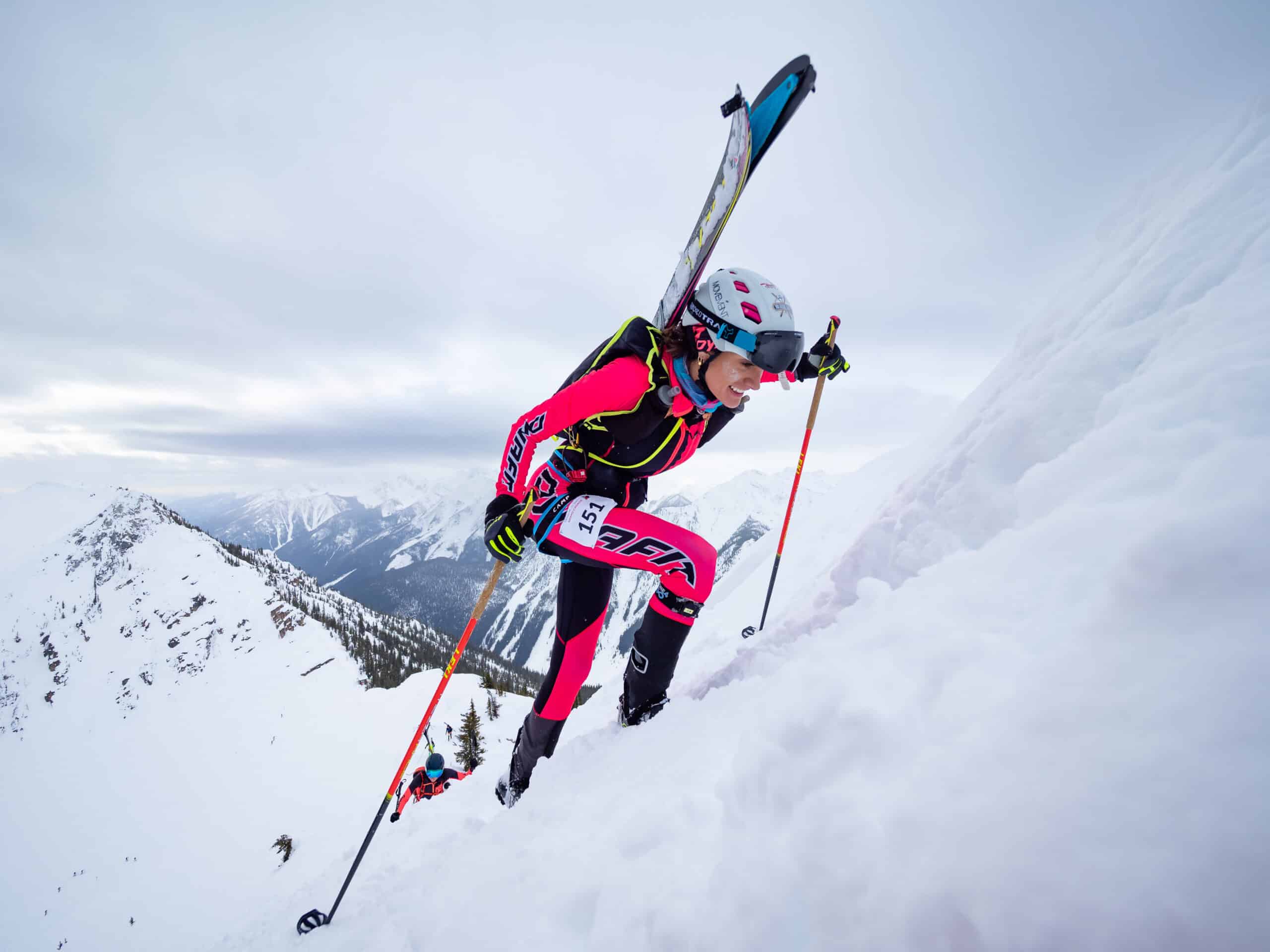


Are you an endurance athlete and/or backcountry skier interested in skimo racing but unsure where to start? This course is designed to bridge the gap between traditional ski touring and the fast-paced, minimal world of ski mountaineering (skimo) racing.
Skinning uphill for fitness on your backcountry setup is one thing- racing efficiently on lightweight, specialized race gear is another. Learn the essential skills that make all the difference, including transitions, boot packing, adapting your pace and skinning technique to changing terrain and fueling for performance.
Whether you’re preparing for your first race or looking to sharpen your technical skills, this course will help you build the confidence and efficiency to train for local events like the legendary Alpental Vertfest
The course is taught by Christina Volken, a three-time USA National Team member with World Cup experience and AMGA Apprentice Ski Guide. The course will take place on two weeknight evenings at Summit Snoqualmie, from 4:00pm to 8:00pm each night.
Who is this course for?
This is not a beginner ski touring course, basic uphill and downhill ski skills are required. No previous skimo racing experience is required.

Night 1:
We will introduce and practice the skills specific to skimo racing
Night 2:
We will focus on applying the skills learned on Night 1 over a mock race course. Think of this as a slow-motion race effort. We will also introduce strategies for fueling (nutrition) and pacing.
A lightweight training setup or dedicated skimo race setup is strongly recommended. Demo/rental equipment may be available through our partners at Pro Ski & Mountain Service.
Skimo racing is a human-powered winter endurance sport that takes traditional ski mountaineering skills and distills them into a high output, fast paced racing format. Skimo racers use specialized, ultra-light gear that allows for quick transitions between uphill skinning, downhill skiing, and racing up a slope on foot with skis attached to their backpack. A typical race will have multiple uphill, downhill, and bootpacking segments along a pre-determined and marked course. There are several disciplines in the skimo racing world, from short sprint and mixed relay courses, to vertical (uphill only), to multi-day stage races like the Patrouille des Glaciers (PDG) and the Mezzalama. The most common and popular race format is the individual or team race, often lasting from 1-3 hours with anywhere from 4,000' - 6,000' of vertical throughout the course. Skimo racing made its Olympic debut with the Sprint and Mixed Relay disciplines at the 2026 Cortina Games.
In traditional ski touring and ski mountaineering, the goal is to maintain a steady but easy pace that allows you to get to your destination and ski back with energy left to spare. Heavier and more restrictive gear calls for subtle differences in the movement of your joints and muscles compared to skimo racing. On ultralight skimo racing gear with great range of motion, racers achieve a different stride and higher cadence allowing them to cover ground and gain vertical much more efficiently compared to ski touring equipment. The downside, of course, is it feels like you are trying to ski downhill on glorified toothpicks attached to hightop sneakers. Learning to adapt your downhill skiing style is a critical skill to skimo racing and part of what we will cover in this course. Mastery of uphill skinning technique also becomes very important in skimo racing. You must be precise and efficient to prevent the tiny skis and flimsy skins from slipping out or falling off.
Most skimo races in the US allow for entry using whatever gear you choose. There is often a separate category for racers choosing not to participate on ultralight gear. Aside from the weight savings and efficiencies gained by using ultralight gear, the boots, bindings, and skins are specially designed to allow for super quick transitions between uphill and downhill modes. Most ski touring equipment simply doesn't allow for those types of transitions. Regular touring gear (AT skis) will work, it will just feel slow and heavy. You may be able to demo or rent some racing gear from our partners at Pro Ski & Mountain Service if you are interested.